

 |
Western, A. G. and Gowland, R. | 2017 | Spatial Epidemiology and 'Stress' Indicators: Detecting Vivax Malaria in Co-morbid Environments. Poster presentation at the Stressed Out Conference, UCL, London.
|
| Western, A. G. and Bekvalac, J. | 2017 | Hyperostosis frontalis interna in female historic skeletal populations: Age, sex hormones and the impact of industrialisation. American Journal of Physical Anthropology. Vol. 162 (3) pp. 501-515.
|
|
| Western, A. G. | 2017 | Archaeological Investigations at the Site of the Former Worcester Royal Infirmary: New Evidence for Dissection and Amputation from a Provincial Hospital. Transactions of the Worcestershire Archaeological Society.
|
|
| Western, A. G. | 2016 | Osteological Analysis of Cremated Bone from Clifton Quarry, Kempsey, Worcestershire. OA1072.
|
|
|
Bekvalac, J. and Western, A. G. | 2016 | Manufactured Bodies: The Impact of Industrialisation on London Health. Poster presented at BABAO, 2016.
|
| Western, A. G. | 2016 | Osteological Analysis of Human Remains from the Horse and Groom site, Bourton on the Hill, Gloucestershire. L-PArchaeology/Urban Archaeology. OA1045.
|
|
| Western, A. G. | 2016 | Osteological Analysis of the Human Remains from the former Chapel of St. Mary's, Whittal Street, Birmingham. OA1065.
|
|
| Western, A. G. | 2016 | Osteological Analysis of the Human Remains from the South Side of Holy Trinity Church, Old Town, Stratford-upon-Avon, Warwickshire. OA1063. A large assemblage of 304 articulated individuals in addition to an assemblage of 28,889 disarticulated fragments interred within the churchyard of Holy Trinity Church, dating from 1119AD to 1887AD.
|
|
|
Bekvalac, J. and Western, A. G. | 2016 | The Impact of Industrialization on Health. Radiol Open J. 1(3): pp 76-78.
|
| Western, A. G. | 2015 | Osteological Analysis of the Human Remains from the Cathedral Square Roundabout, Worcester. OA1060 | |
|
Bekvalac, J. and Western, A. G. | 2015 | The Impact of Industrialisation on Female Health: Understanding the Aetiology of Hyperostosis Frontalis Interna (2015) Poster presented at BABAO, 2015.
|
| Western, A. G. and Bekvalac, J. | 2015 | The Remains of a Humanitarian Legacy: Bioarchaeological Reflections of the Anatomized Human Skeletal Assemblage from the Worcester Royal Infirmary. In Gerdau-Radonic, K and McSweeney, K. (eds), Trends in Biological Anthropology 1. Oxbow Books, pp. 76-88.
|
|
| Connolly, E. Vaughan, T., Western, A. G. et al. | 2015 | Archaeological Investigations on the Flood Alleviation Scheme, Upton upon Severn, Worcestershire. Transactions of the Worcestershire Archaeological Society.
|
|
| Vaughan, T., Webster, J. and Western, A. G. | 2015 | Archaeological Investigations on the Flood Alleviation Scheme, Kempsey, Worcestershire. Transactions of the Worcestershire Archaeological Society.
|
|
| Western, A. G. | 2015 | Digital Radiography and historic contextualisation od the 19th century modified human skeletal remains from the Worcester Royal Infirmary, England. International Journal of Paleopathology, Vol. 10 (September), pp. 58-73
|
|
| Western, A. G. and Kausmally, T. | 2014 |
A substantial disarticulated assemblage associated from the post-medieval Infirmary with evidence of post-mortem medical intervention, peri-mortem trauma and many patholoigcal lesions. Includes details of the associated finds and excavation.
|
|
| Dalwood, H., Baxter, I, Western, A. G. et al. | 2015 | Excavations at the University of Worcester, City Campus, Castle Street, Worcester. Transactions of the Worcestershire Archaeological Society.
|
|
|
Western, A. G. | 2014 | Osteological Analysis of the Cremated Bone from Cae'r Odyn, Pen y Garn, Rhydypennau, Ceredigion. Archaeology Wales Ltd. OA1050. Small deposit of cremated bone from a funerary complex, idenitifed as human and radiocarbon dated to the Neolithic period.
|
| Bekvalac, J., Western, A. G. and Farmer, M. | 2014 | The Application of Direct Digital Radiographic Imaging to Skeletal Assemblages. Presentation for the Annual Conference of the Anatomical Society, Univesity of Bradford, based upon current radiographic research undertaken on the human remains from the Worcester Royal Infirmary and St. Bride's Crypt, London.
|
|
|
Western, A. G. | 2014 | Osteological Analysis of Human Remains from Ovebury, Worcestershire. Worcestershire Archaeology. OA1046. Two Roman inhumation burials.
|
| Bekvalac, J., Western, A. G. and Farmer, M. | 2014 | The
Impact of Industrialisation on Health in London: Understanding the
Aetiology of Hyperostosis Frontalis Interna. Poster Presentation for the Annual Conference of the American Association of Physical Anthropologists, Canada. Presentation of the initial results of digital radiographic research into the role of industrialisation in the prevalence of Hyperostosis Frontalis Interna (HFI) in skeletal populations, primarily based on individuals of known age and sex from St. Bride's Crypt, London.
|
|
|
Western, A. G. | 2014 |
Osteological Analysis of Human Remains from the Old Church of St. Peter and St. Paul, Upton-on-Severn, Worcestershire. Worcester Archaeology. OA1044. Assemblage of 24 well preserved post-medieval inhumantions in addiditon to a collection of disarticulated bone with many examples of trauma and joint disease as well as a possible rare case of cancer. Also evidence for funerary practices from shroud pin preservation and staining, including the recovery of a lock of hair. Skeletal findings were set into their historical context using documentary evidence such as burial records and census data.
|
| Western, A. G. | 2014 |
Osteological Assessment of Human Remains from Turing College, University of Kent, Canterbury, Kent. Canterbury Archaeological Trust. OA1043. Prehistoric cremtation burials with some unburned human bone deposits.
|
|
| Western, A. G. and Hurst, J. D. |
2014 |
If human burials were our only window onto the past, what story would they tell? Skeletal injuries constitute the most direct and unambiguous evidence for violence in the past. Whereas weapons or defenses may simply be statements of prestige or status and written sources are characteristically biased and incomplete, human remains offer clear and unequivocal evidence of physical aggression reaching as far back as we have burials to examine. The studies in The Routledge Handbook of the Bioarchaeology of Human Conflict present an overview of the nature and development of human conflict from prehistory to recent times as evidenced by the remains of past people themselves in order to explore the social contexts in which such injuries were inflicted. A broadly chronological approach is taken from prehistory through to recent conflicts, however this book is not simply a catalogue of injuries illustrating weapon development or a narrative detailing ‘progress’ in warfare but rather provides a framework in which to explore both continuity and change based on a range of important themes which hold continuing relevance throughout human development.
|
|
|
Western, A. G. | 2013 |
Osteological Analysis of the Human Remains from Kingston Down Anglo-Saxon Cemetery, Canterbury, Kent. Canterbury Archaeological Trust, OA1042.
|
|
Western, A. G. | 2013 |
Osteological Analysis of the Human Remains from The Butts, Worcester City. Worcestershire Archive and Archaeology Service, OA1041.
|
|
Western, A. G. | 2013 |
Osteological Analysis of the Human Remains from Yazor Brook, Credenhill, Herefordshire. Worcestershire Archive and Archaeology Service, OA1040.
|
|
Bekvalac, J . and Western, A. G. | 2013 |
|
|
Western, A. G. and Kausmally, T. | 2012 |
Osteological Analysis of the Cremated Bone from Banbury Lane, Middleton Cheyney, Northamptonshire. Archaeological Services and Consultancy Ltd. OA1038.
|
|
Western, A. G. and Bekvalac, J. | 2012 |
'The Wandering Jew': The Humanitarian Role of Post-Mortem Examinations in the Identity of Pathology and Persons in the Early Modern Period. BABAO funded poster presentation, BABAO conference, University of Bournemouth.
|
|
Western, A. G. | 2012 |
Osteological Analysis of the Cremated Bone from Brockhill Lane, Redditch, Worcestershire. WAAS. OA1039.
|
| Kausmally, T. | 2012 |
Osteological Analysis of the Faunal Cremated Bone from Brockhill Lane, Redditch, Worcestershire. WAAS. FA1039.
|
|
|
Western, A. G. |
2012 |
Osteological
Analysis of the Human Remains from St. Mary's Church, Kempsey, Worcestershire.
WAAS. OA1037.
|
|
Western, A. G. Kausmally, T. |
2012 |
 A
Star of the First Magnitude: Osteological and Historical Evidence
for the Challenge of Provincial Medicine at the Worcester Royal Infirmary
in the Nineteenth Century. In Mitchell, P. (ed.), Anatomical Dissection
in Enlightenment England and Beyond, pp. 23-42. A
Star of the First Magnitude: Osteological and Historical Evidence
for the Challenge of Provincial Medicine at the Worcester Royal Infirmary
in the Nineteenth Century. In Mitchell, P. (ed.), Anatomical Dissection
in Enlightenment England and Beyond, pp. 23-42. William Hewsen and The Craven Street Anatomy School. In Mitchell, P. (ed.), Anatomical Dissection in Enlightenment England and Beyond, pp. 69-76. Excavations of medical school and workhouse cemeteries undertaken in Britain in the last decade have unearthed fascinating new evidence for the way that bodies were dissected or autopsied in the eighteenth and nineteenth centuries. This book brings together the latest discoveries by these biological anthropologists, alongside experts in the early history of pathology museums in British medical schools and the various royal colleges of surgeons, and medical historians studying the social context of dissection and autopsy in the Georgian and Victorian periods. Together they reveal a previously unknown view of the practice of anatomical dissection and the role of museums in this period, in parallel with the attitudes of the general population to the study of human anatomy in the Enlightenment.
|
|
|
Gowland, R. and Western, A. G. | 2012 | Morbidity in the Marshes: Using Spatial Epidemiology to Investigate Skeletal Evidence for Malaria in Anglo-Saxon England (AD410-1050). American Journal of Physical Anthropology 147 (2): 301-311. Ongoing research based at the University of Durham: Investigating Morbidity and Malaria in Wetland Anglo-Saxon Environments
|
| Hurst, D. and Western, A. G. | 2012 | New Light on Kemerton Camp, Bredon Hill, Worcestershire. In Royal Archaeological Institute Newsletter, 43, April, pp. 6-7. http://www.royalarchinst.org/sites/royalarchinst.org/files/Newsletter_43.pdf
|
|
| Western, A. G. | 2012 |
|
|
|
Western, A. G. with Warman, S. | 2012 | Osteological Analysis of the Cremated Bone from the Rotherwas Access Road, Herefordshire. WAAS. OA1036.
|
| Western, A. G. | 2012 | Osteological Assessment of Human Remains from the Old Church of St. Peter and St. Paul, Upton-upon-Severn, Worcestershire. WAAS. OA1035.
|
|
| Western, A. G. | 2011 | Osteological Assessment of Human Remains from St. Mary's Church, Kempsey, Worcestershire. WHEAS. OA1034.
|
|
| Western, A. G. and Kausmally, T. | 2011 |
|
|
|
Western, A. G. | 2011 | Osteological Assessment of Human Remains from Grange Farm, Towersey, Thame, Oxon. Benchmark Archaeology. OA1032.
|
| Bekvalac, J. and Kausmally, T. | 2011 | The Human Remains. In Grainger, I. and Phillpotts, C. (eds.), The Cistercian Abbey of St. Mary Graces, East Smithfield, London. London: MoLAS Monograph Series.
|
|
| Sworn, S., Jacobs, A., Pearson, E. and Western, A. G. | 2010 | Archaeological Fieldwork at Worcester College of Technology (All Saints Building), Worcester. In Trans. Worcestershire Archaeol. Soc. 3rd ser., 20: 261:276.
|
|
| Western, A. G. | 2010 |
Osteological Analysis of Human Remains from The Hoplands, Sleaford,
Lincolnshire. APS. OA1031.
|
|
| Western, A. G. and Kausmally, T. | 2010 | Osteological Analysis of Human Remains from the Worcester Royal Infirmary, Castle Street, Worcester. WHEAS. OA1030. A substantial disarticulated assemblage associated from the post-medieval Infirmary with evidence of post-mortem medical intervention, peri-mortem trauma and many patholoigcal lesions.
|
|
| Kausmally, T. | 2009 |
|
|
|
Western, A. G. | 2009 | Osteological
Analysis of the Human Remains from City College, Southampton, Hampshire.
SCC Archaeology Unit. OA1029.
|
|
Western, A. G. | 2009 |
|
|
Western, A. G. | 2009 | Osteoarchaeological
Analysis of the Skeletal Remains from Sainsbury's Site, St. Johns,
Worcester. WHEAS. OA1027.
|
| Kausmally,T. | 2009 |
(Institute of Archaeology, UCL) The Craven Street Anatomy School
(1774-1778). 18th-century anatomical teaching seen from an archaeological
perspective. Presentation for the Centre for Health, Medicine
and Society, Oxford.
|
|
| Western, A. G. and Kausmally, T. | 2008 |
Re-analysis of the Human Remains from Kemerton Camp Hill Fort,
Bredon Hill, Gloucestershire: an investigation into bio-archaeological
indicators of coalition violence. Paper presented at the Annual
Conference of the British Association for Biological Anthropology
and Osteoarchaeology. More
details >
|
|
| Robert Cowie, Jelena Bekvalac and Tania Kausmally | 2008 |
|
|
| Kausmally, T. | 2008 | A History in Bone: William Hewson and the Craven Street Anatomy School. 17th European Meeting of the Paleopathological Association “Diseases in the Past” Copenhagen, Denmark 25-27th August
|
|
|
Western, A. G. | 2007 | An assessment of the human remains and funerary archaeology. In Williams, P. An Archaeological Recording at All Saint's Church, Bisley, Gloucestershire. Mercian Archaeology. PJ200.
|
|
Western, A. G. | 2007 |
Osteological Analysis of a Human Skeleton from a Capuchin Monastery,
Antwerp, Belgium. OA1014.
|
| Bekvalac, J. & Leach, S. | 2007 | An introduction to human remains:St Peter’s church, Barton-upon- Humber, Lincolnshire. Outreach Project for English Heritage Open Day.
|
|
| Western, A. G. | 2007 |
|
|
| Kausmally, T. | 2007 | Book Review: Photographic regional atlas of bone disease: a guide to pathologic and normal variation in the human skeleton. Med Hist. 2007 July 1; 51(3): 409–410
|
|
| Kausmally, T. | 2007 | The animal bones. Excavations at the gardens, Sprotborough, South Yorkshire. Yorkshire Archaeological Journal 79, 303-305
|
|
| Griffin S., Western, A. G., Mann, A., & Dalwood, H. | 2006 | A Late Iron Age Burial at Old Yew Hill Wood, Church Lench. In Trans. Worcestershire Archaeol. Soc., 3rd ser., 20:1-9.
|
|
|
Kausmally, T. | 2006 | Analysis of the Faunal Remains from Hill Croft, Bodenham, Herefordshire. Herefordshire Archaeology . OA/FA1013.
|
|
Western, A. G. | 2006 | Osteological Analysis of the Cremated Remains from Castle Field, Stapleton, Herefordshire. Herefordshire Archaeology. OA/FA1012.
|
|
Western, A. G. | 2006 |
Osteological Analysis of the Human Remains from St. Andrew's
Burial Ground, Worcester. Worcester Historic Environment and
Archaeological Service. OGW1011. Case
Study
|
| Brickley, M., Berry, H., & Western, A. G. | 2006 |
|
|
| Bekvalac, J. and Kausmally, T. | 2006 | Chelsea Lives: A Record in Bone. The Chelsea Society Report 2006. 34-49.
|
|
|
Kausmally, T. and Western, A. G. | 2005 | Human and Faunal Remains from Gramer House, Mancetter, Warwickshire. Mercian Archaeology PJ153.
|
|
Kausmally, T. and Western, A. G. | 2005 | Excavation of Faunal Skeletal Remains from Archaeological Sites. BAJR.
|
|
Western, A. G. and Kausmally, T. | 2005 | Analysis of the Cremated Bone from Roman Road, near Stretton Sugwas, Herefordshire. Mercian Archaeology, PJ 140
|
|
Powers, N. | 2005 | Cranial Trauma and Treatment: A Case Study from the Medieval Cemetery of St. Mary Spital, London. Int. J. of Osteoarchaeology 15: 1-14
|
|
Western, A. G. and Kausmally, T. | 2005 |
|
|
Western, A. G. and Kausmally, T. | 2004 | A Basic Overview for the Recovery of Human Remains from Sites Under Development. BAJR.
|
|
Western, A. G. and Kausmally, T. | 2004 | Human Remains from George Lane and Furzen Farm, near Wyre Piddle, Worcestershire.Mercian Archaeology, PJ 120
|
|
Western, A. G. | 2004 | Human
Remains from the Commandery, Worcester. Mercian Archaeology,
PJ 116
|
|
Western, A. G. | 2003 |
Human Remains from the Chapter House, Worcester Cathedral.
Mercian Archaeology, PJ 112
|
|
Western, A. G. | 2003 | Osteological Analysis of Human Remains from Upper Moor, near Wyre Piddle, Worcestershire. Mercian Archaeology, PJ 108.
|
| Brickley, M., Berry, H. and Western, A. G. | 2004 | Health and the onset of urbanisation and industrialisation in 18th and 19th century: Investigations at St. Martin's Churchyard, Birmingham. Paper presented at: the British Association of Biological Anthropology and Osteoarchaeology.
|
|
| Brickley, M., Adams J., Berry H. and Western, A. G. | 2003 |
Palaeopathological investigations at the historic cemetery of St. Martins, England. American Journal of Physical Anthropology Supplement 36.
|
|
| Brickley, M., Berry, H., Ives R., and Western, A. G. | 2003 | Fractures: Prevalence, Treatment and Healing: An insight into medicine and society in 18th and 19th century Birmingham. Paper presented at: Medicine and Society in Midlands Conference, Birmingham.
|
|
| Kausmally, T. | 2003 | Report on Abbots Mews Hotel, York - oesteological assemblage. On-site Archaeology, York.
|
|
| Kausmally, T. | 2003 | Report on Sewerby Cottage Farm Inhumations, Cremated Bone and Zooarchaeological Remains. On-site Archaeology, York.
|
|
| Griffin, S., Mann, A. and Western, A. G. | 2002 | Excavation at Old Yew Hill Wood, Church Lench, Worcestershire. Archaeological Service, Worcestershire County Council, Report 904.
|
|
| Kausmally, T | 2002 |
Report on a human inhumation from All Saints School, Blossom St., York. On-site Archaeology, York
|
|
| Kausmally, T. | 2002 | Report on six inhumations at 136, Lawrence St., York, St. Nicholas Hospital, Medieval. On-site Archaeology, York.
|
|
| Kausmally, T. | 2002 | Report on a human inhumation from Mill Mount, York. On-site Archaeology, York.
|
|
| Kausmally, T. | 2002 | Report on a human juvenile inhumation from Mill Mount, York. On-site Archaeology, York.
|
|
| Kausmally, T. | 2002 | An assessment ofthe osteological assemblage, Hungate, York. On-site Archaeology, York.
|
|
| Kausmally, T. | 2002 | Report on the zooarchaeological remains from the Malham-Hellifield pipeline. On-site Archaeology, York.
|
|
| Kausmally, T. | 2002 | Report on the zooarchaeological remains from an evaluation on Speculation St., York. On-site Archaeology, York.
|
|
| Kausmally, T. | 2002 |
Transco-West Hull - Pipeline project 2001/2002 - Osteological Assessment Report. On-site Archaeology, York.
|
 Rare
and well preserved middle Iron Age inhumation burial with strontium,
carbon and nitrogen stable isotope analysis undertaken.
Rare
and well preserved middle Iron Age inhumation burial with strontium,
carbon and nitrogen stable isotope analysis undertaken. 
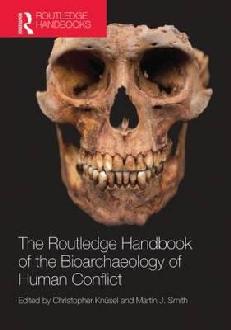 "Soft
Heads": Evidence for Sexualized Warfare during the Later Iron
Age from Kemerton Camp, Bredon Hill. In Knuesel, C. and Smith M.
J. (eds). The Routledge Handbook of the Bioarchaeology of Human
Conflict. Abingdon, Oxon: Routledge. Pp. 161-184.
"Soft
Heads": Evidence for Sexualized Warfare during the Later Iron
Age from Kemerton Camp, Bredon Hill. In Knuesel, C. and Smith M.
J. (eds). The Routledge Handbook of the Bioarchaeology of Human
Conflict. Abingdon, Oxon: Routledge. Pp. 161-184.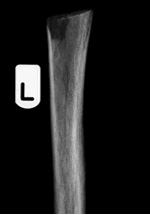 The
Application of Digital Radiographic Analysis to Skeletal Assemblages.
Poster presentation, American Association of Physical Anthropologists
Conference, Knoxville, Tennessee, USA.
The
Application of Digital Radiographic Analysis to Skeletal Assemblages.
Poster presentation, American Association of Physical Anthropologists
Conference, Knoxville, Tennessee, USA.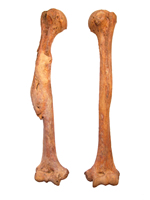 A
Basic Overview for the Recovery of Human Remains from Sites Under
Development.
A
Basic Overview for the Recovery of Human Remains from Sites Under
Development. 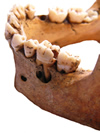 Osteological
Analysis of Human Remains from the Worcester Royal Infirmary, Castle
Street, Worcester. WHEAS. OA1030. (Updated). A substantial
disarticulated assemblage associated from the post-medieval Infirmary
with evidence of post-mortem medical intervention, peri-mortem trauma
and many patholoigcal lesions.
Osteological
Analysis of Human Remains from the Worcester Royal Infirmary, Castle
Street, Worcester. WHEAS. OA1030. (Updated). A substantial
disarticulated assemblage associated from the post-medieval Infirmary
with evidence of post-mortem medical intervention, peri-mortem trauma
and many patholoigcal lesions.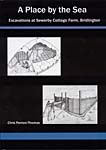 The
human and animal bones from Zones A and B. In Fenton-Thomas, C
The
human and animal bones from Zones A and B. In Fenton-Thomas, C  Osteological
Analysis of the Cremated Human Remains from Buttington Cross, Welshpool,
Powys, Wales. WHEAS. OA1028.
Osteological
Analysis of the Cremated Human Remains from Buttington Cross, Welshpool,
Powys, Wales. WHEAS. OA1028. Late
17th- to 19th-century burial and earlier occupation at All Saints,
Chelsea Old Church, Royal Borough of Kensington and Chelsea.
Archaeology Studies Series. MoLAS2008
Late
17th- to 19th-century burial and earlier occupation at All Saints,
Chelsea Old Church, Royal Borough of Kensington and Chelsea.
Archaeology Studies Series. MoLAS2008 Osteological
Analysis of the Interred and Cremated Skeletal Assemblage from an
Anglo-Saxon Cemetery at Highfield Farm, Littleport, Cambridgeshire.
Archaeological Project Services. OA1013.
Osteological
Analysis of the Interred and Cremated Skeletal Assemblage from an
Anglo-Saxon Cemetery at Highfield Farm, Littleport, Cambridgeshire.
Archaeological Project Services. OA1013.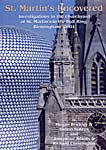 The
People: Physical Anthropology in
The
People: Physical Anthropology in 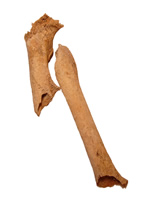 A
Field Guide to the Excavation of Inhumated Human Remains. BAJR.
A
Field Guide to the Excavation of Inhumated Human Remains. BAJR.


